Sahrawi human rights defender Enaâma Asfari suspends his hunger strike after 47 days, following dialogue with prison authorities
On 24 July 2026 Enaâma Asfari informed his family by telephone that he had decided to suspend his hunger strike after the Moroccan prison administration initiated what he described as “a serious dialogue” concerning the humanitarian and legal demands he had raised throughout his peaceful protest. The human rights defender reportedly considered the suspension of the hunger strike to be part of this ongoing dialogue and efforts to secure the implementation of his demands.
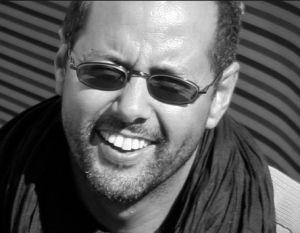 Enaâma Asfari is a prominent Sahrawi human rights defender and Vice-President of the Committee for Liberties and Respect for Human Rights in Western Sahara (CORELSO). For many years, he has peacefully documented and denounced human rights violations in Western Sahara and advocated for the rights of the Sahrawi people. He is one of the "Gdeim Izik prisoners" who were arrested prior to, during and after the dismantling of the peaceful protest camp of Gdeim Izik on 8 November 2010. He was arrested on 7 November 2010, the day before the camp was dismantled. He spent five days in an unknown location, where he was held blindfolded and handcuffed. He has stated that he signed declarations and confessions under torture. In 2017, Enaâma Asfari was sentenced to 30 years' imprisonment by the Court of Appeal in Salé.
Front Line Defenders welcomes reports stating that imprisoned Sahrawi human rights defender Enaâma Asfari has suspended his indefinite hunger strike, which began on 8 June 2026. After 47 days and following the opening of a dialogue with the Moroccan prison administration regarding his humanitarian and legal demands, the defender interrupted his hunger strike.
While this development may help safeguard Enaâma Asfari's health, Front Line Defenders remains deeply concerned about his physical condition following the prolonged hunger strike and reiterates its call for his immediate release and for the implementation of the 2023 Opinion of the UN Working Group on Arbitrary Detention (WGAD).
Enaâma Asfari is a prominent Sahrawi human rights defender and Vice-President of the Committee for Liberties and Respect for Human Rights in Western Sahara (CORELSO). For many years, he has peacefully documented and denounced human rights violations in Western Sahara and advocated for the rights of the Sahrawi people. He is one of the "Gdeim Izik prisoners" who were arrested prior to, during and after the dismantling of the peaceful protest camp of Gdeim Izik on 8 November 2010. He was arrested on 7 November 2010, the day before the camp was dismantled. He spent five days in an unknown location, where he was held blindfolded and handcuffed. He has stated that he signed declarations and confessions under torture. In 2017, Enaâma Asfari was sentenced to 30 years' imprisonment by the Court of Appeal in Salé.
On 24 July 2026 Enaâma Asfari informed his family by telephone that he had decided to suspend his hunger strike after the Moroccan prison administration initiated what he described as “a serious dialogue” concerning the humanitarian and legal demands he had raised throughout his peaceful protest. The human rights defender reportedly considered the suspension of the hunger strike to be part of this ongoing dialogue and efforts to secure the implementation of his demands.
During the telephone call, Enaâma Asfari was reportedly unable to provide further details because of the severe deterioration of his health resulting from the 47-day hunger strike. He indicated that he expected to provide his family with further information later, notably following additional discussions with the prison authorities.
Prior to launching the indefinite hunger strike on 8 June 2026, Enaâma Asfari carried out three separate 48-hour hunger strikes during May 2026, all of which went unanswered by the Moroccan authorities. He began the open-ended hunger strike to demand the implementation of the 2023 Opinion of the UN Working Group on Arbitrary Detention, which found that the detention of the Gdeim Izik prisoners was arbitrary and called for their prompt release. The WGAD concluded that the detainees had been subjected to serious violations of their fair trial rights, including denial of access to legal counsel, the use of confessions allegedly obtained under torture, and proceedings before a court lacking impartiality and independence.
While Front Line Defenders welcomes the reported opening of dialogue and the suspension of the hunger strike, the organisation remains concerned about the long-term impact of the prolonged protest on Enaâma Asfari's health and continues to monitor developments closely.
Front Line Defenders also remains concerned by ongoing reports of medical neglect, reprisals and other forms of ill-treatment against Sahrawi human rights defenders in detention.
Front Line Defenders believes that the continued detention and reported ill-treatment of Enaâma Asfari and the other imprisoned members of the Gdeim Izik group are solely linked to their peaceful and legitimate human rights work.
Front Line Defenders calls on the authorities in Morocco to:
Immediately release Enaâma Asfari and the other arbitrarily detained members of the Gdeim Izik group, in accordance with the 2023 Opinion of the UN Working Group on Arbitrary Detention;
Ensure that Enaâma Asfari has immediate access to adequate, independent and specialised medical care of his own choosing, and guarantee his physical and psychological integrity while he remains in detention;
Ensure that any commitments made during the reported dialogue with Enaâma Asfari are implemented promptly and in good faith, in accordance with Morocco's international human rights obligations;
End all forms of reprisals, medical neglect, ill-treatment and discriminatory treatment against Sahrawi human rights defenders in detention, and ensure that they have regular access to their families, lawyers and adequate healthcare;
Conduct prompt, thorough, independent and impartial investigations into all allegations of torture and ill-treatment, ensure accountability for those responsible, and exclude from judicial proceedings any evidence or confessions obtained under torture, in accordance with Morocco's obligations under the Convention against Torture;
Guarantee in all circumstances that all human rights defenders in Western Sahara and throughout Morocco are able to carry out their legitimate human rights activities freely and safely, without fear of judicial harassment, arbitrary detention, intimidation or reprisals.

