Case History: Lujain Al-Hathlol
On 12 February 2014, women human rights defenders Ms Maysaa Al-Amodi and Ms Lujain Al-Hathlol were released after spending more than two months in detention. They had both been charged with “breaching public order” and “overriding the guardian’s authority”.
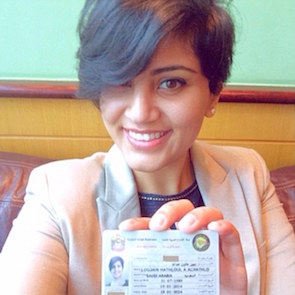 Lujain Al-Hathloul is a women's rights defender who has advocated for the right for women to drive in Saudi Arabia. She actively participated in the 26 October Saudi Women Driving Campaign and she posted videos of herself encouraging women to drive their cars within the context of this campaign in 2013.
On 12 February 2014, women human rights defenders Ms Maysaa Al-Amodi and Ms Lujain Al-Hathlol were released after spending more than two months in detention. They had both been charged with “breaching public order” and “overriding the guardian’s authority”.
Maysaa Al-Amodi and Lujain Al-Hathlol are women's rights defenders who have advocated for the right for women to drive in Saudi Arabia. Lujain Al-Hathlol actively participated in the 26 October Saudi Women Driving Campaign and she posted videos of herself encouraging women to drive their cars within the context of this campaign in 2013. Maysaa Al-Amodi, who is a TV host and well-known media personality, was also vocal about the right to drive.
The case against the human rights defenders had been transferred to the Specialized Criminal Court in Riyadh, which deals with terrorism and State security cases, but it is not clear whether there will be further court proceedings. Previously, on 25 December 2014, the Al-Ahsaa Criminal Court dismissed the case against both human rights defenders on the grounds that the court had no legal jurisdiction over the case.
Maysaa Al-Amodi and Lujain Al-Hathlol had been in detention since 1 December 2014, when they were arrested for attempting to drive into Saudi Arabia from the United Arab Emirates. Maysaa Al-Amodi was detained at Al-Ahsaa Central Prison while Lujain Al-Hathlol was held at Al- Ahsa juvenile centre for girls. More information is available on the case on the Front Line Defenders' website.
Front Line Defenders welcomes the release of Maysaa Al-Amodi and Lujain Al-Hathlol but remains concerned at the charges brought against them, which are the direct result of their human rights work.
11 December 2014 marks the 10th day since the arrest and detention of two women human rights defenders Ms Maysaa Al-Amodi and Ms Lujain Al-Hathlol. On 7 December 2014 they were both informed that their detention has been extended for an additional 25 days. Both defenders were detained on 1 December 2014 for attempting to drive over the Saudi border. Maysaa Al-Amodi is currently being held at Al- Ahsa Central Prison while Lujain Al-Hathlol is held at Al- Ahsa juvenile centre for girls. The human rights defenders, as well as their families and their lawyers, are unaware of any official charges against them.
Maysaa Al-Amodi and Lujain Al-Hathlol are women's rights defenders who have advocated for the right for women to drive in Saudi Arabia. Lujain Al-Hathlol actively participated in the 26 October Saudi Women Driving Campaign and she posted videos of herself encouraging women to drive their cars within the context of this campaign in 2013. Maysaa Al-Amodi, who is a TV host and well known media personality, was also vocal about the right to drive.
On 30 November 2014, Lujain Al-Hathlol drove to the Saudi border from Abu Dhabi and attempted to cross into Saudi Arabia. Although she carries a UAE driving license that is valid in all Gulf Council Countries, she was asked by the Saudi authorities to park her car at the Al-Batha border crossing until they received further notice from superiors. While they awaited this, her passport was confiscated and she was held inside her car at the border crossing overnight.
On 1 December 2014, Maysaa Al-Amodi drove from Dubai to the border crossing to bring supplies to Lujain Al-Hathlol without the intention of crossing the border to Saudi Arabia. It was reported that she parked on the UAE side of the border crossing and walked over to the border guards where she informed them that she did not intend to cross the border. She was asked by the border guards to get back into her car and to make a U-turn to return back to Dubai, which involved having to cross over the border in order to complete the U-turn. Once she crossed the border, she was immediately arrested by female officers and her car, personal items and documents were confiscated. Similarly, the following day Lujain Al-Hathlol was informed that she would be allowed to cross the border. However, once she had driven across, she was also arrested. They were taken directly to prison, Maysaa Al-Amodi was taken to Al- Ahsa Central prison and Lujain Al-Hathlol to Al- Ahsa juvenile centre for girls, a detention centre for women under the age of thirty. Since their detention, they have been interrogated by the Prosecution Office.
The two human rights defenders have not been granted access to legal representation since their detention and their lawyers have not been given access to the investigation files.
Front Line Defenders expresses its concern at the detention of Maysaa Al-Amodi and Lujain Al-Hathlol and the fact that they have not had contact with their lawyers whilst in detention. Front Line Defenders believes that their arrest and detention is a direct result of their human rights activism.

