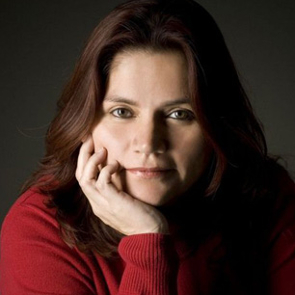
Claudia Julieta Duque
In 2010, the International Women’s Media Foundation awarded Claudia Julieta Duque the Courage in Journalism Award. “As a victim, I will fight until the last day of my life for real justice, which only will be possible when former President Alvaro Uribe …. is convicted for the illegal persecution he led against more than 300 people in Colombia,” Duque said receiving the award. “As a journalist, I will continue working to make people aware about the real dimensions of the espionage and its consequences for Colombia’s democracy.”
In 2011, Claudia Julieta Duque co-authored an article published in The Washington Post where she reported that President Uribe may have been involved in illegal actions using the Departamento Administrativo de Seguridad - DAS (Administrative Security Department), with the help of the United States.
The Ilaria Alpi Award is dedicated to Ilaria Alpi, the Italian journalist killed in Mogadishu in 1994, together with the cameraman Miran Hrovatin. In 2010, the prize was awarded to Claudia Julieta Duque, to honour her courage and to highlight the important role of investigative journalists in seeking the truth.
I will fight until the last day of my life for real justice
Claudia Julieta Duque is an investigative journalist and she currently works for Radio Nizkor, a digital information project of the human rights NGO Equipo Nizkor. She has written for several national and international media. She is also an honorary member of the National Union of Journalists of the United Kingdom and Ireland, and of the International Federation of Journalists (IFJ).
During her career as a journalist, she has investigated on numerous high-profile cases, including those involving issues of forced disappearance, forced recruitment of children by legal and illegal armed groups, the impact of impunity and the right to justice, and infiltration of paramilitary groups in government agencies. The human rights defender has been the target of intimidation, harassment, threats and surveillance since 2001, when she began investigating into the murder of fellow journalist Jaime Garzón and she found out that agents of the Administrative Department of Security (DAS) were involved in a cover-up. The Colombian government offered her bodyguards for protection, but she later found out that her bodyguards were spying on her. They were informing the DAS about her activities and made false allegations against her. The complaints filed by Duque from 2001 to 2004 finally resulted in the opening of an investigation in 2011. For security reasons, Claudia Julieta Duque was forced to leave the country on several occasions.
Claudia Julieta Duque has received several international awards for her work and her courage. In 2011 Newsweek ranked her one of the ten women journalists most at risk for the sake of journalism and the Daily Beast named her one of the 150 outstanding women around the globe. In 2014 Reporters Without Borders named her as one of the “100 Information Heroes”.

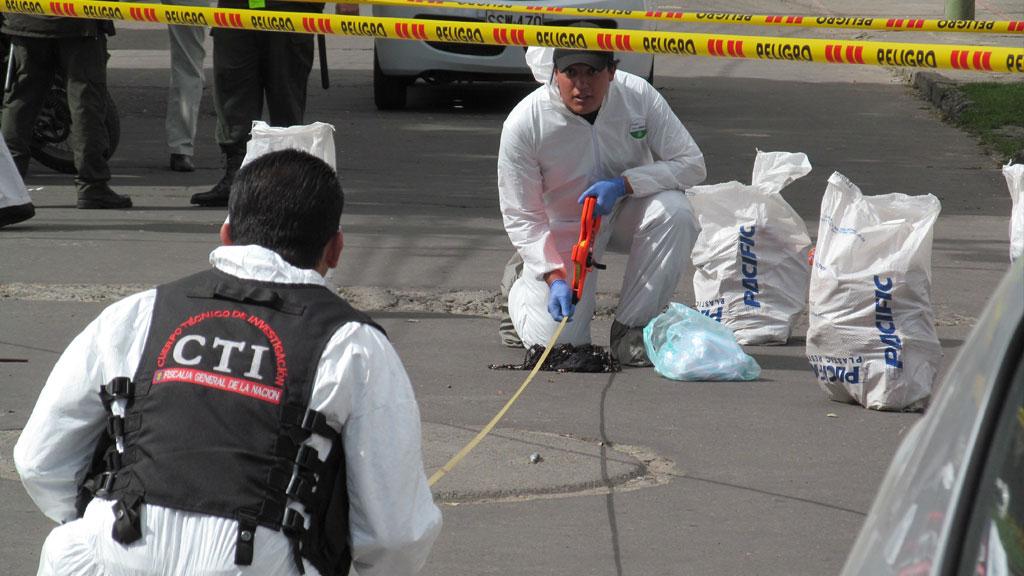
HRDs in Colombia work in a violent and unsafe environment. They are subjected to threats, intimidation, arbitrary detention, enforced disappearances, physical assaults, torture, killings, illegal searches of their homes and offices and stigmatisation as a result of their activities in defence of human rights. The perpetrators of these abuses are frequently paramilitary groups, many of whom have links to the government or security services, or armed opposition groups. The continued frequent and severe threats and attacks against HRDs around the country contradict government claims of paramilitary demobilisation.

