International Solidarity
![]()
- “You are the eyes and ears of the system on the ground. We need you to help us to think creatively about the most appropriate forms of protection.”
- Ms Daniela Salazar Marín
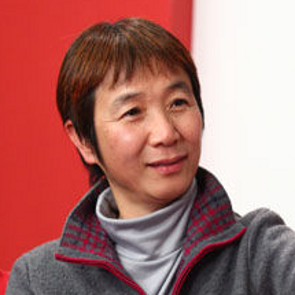
The Platform devoted a session to discussion of the work of UN and regional human rights organisations. It included presentations by Ms. Reine Alapini-Gansou, Special Rapporteur on Human Rights Defenders for the African Commission on Human and Peoples’ Rights, who described her work on behalf of human rights defenders in Africa; and Ms. Daniela Salazar Marín, a lawyer working for the Inter-American Commission on Human Rights, who assessed the Commission’s mandate and activities.
Earlier, Mr Guillaume Pfeifflé described the work of the UN Special Representative of the Secretary General on the situation of human rights defenders. Madame Alapini Gansou set out the focus of her work. This can be summarised as the activities she carried out within the context of her mandate which among other things consists in seeking, receiving, examining and acting on information relative to the situation of human rights defenders in Africa; but which also consists in collaborating and establishing a dialogue with Member States.Towards this end she received information from reliable sources relating to a large number of allegations relating to the abuse of the Defenders. In some cases she had conveyed, letters to the Governments concerned to engage in dialogue with them, and in others she issued Press Releases.
The Inter-American Commission on Human Rights (IACHR) is one of two bodies in the Inter- American system for the promotion and protection of human rights. The Commission has its headquarters in Washington, D.C. The other human rights body is the Inter-American Court of Human Rights, which is located in San José, Costa Rica. The IACHR is an autonomous organ of the Organization of American States (OAS). Its mandate is found in the OAS Charter and the American Convention on Human Rights. The IACHR represents all of the member States of the OAS. It has seven members who act independently, without representing any particular country. The members of the IACHR are elected by the General Assembly of the OAS. Among other activities the Commission receives, analyses and investigates individual petitions which allege human rights violations, pursuant to Articles 44 to 51 of the Convention. It also observes the general human rights situation in the Member States and publishes special reports regarding the situation in a specific State, when it considers it appropriate. Michel Pfeifflé set out the mandate and role of the Special Representative of the Secretary General on the situation of human rights defenders. In its year 2000 session, the Commission on Human Rights (CHR) asked the Secretary-General to appoint a Special Representative on human rights defenders. The Commission’s intention was to give support to implementation of the Declaration on human rights defenders and also to gather information on the actual situation of human rights defenders around the world.
The Special Representative’s mandate (see resolution E/CN.4/RES/2000/61 of 26 April 2000) stipulates that the Special Representative’s main roles are to: seek, receive, examine and respond to information on the situation and the rights of anyone, acting individually or in association with others, to promote and protect human rights and fundamental freedoms; establish cooperation and conduct dialogue with governments and other interested actors on the promotion and effective implementation of the Declaration and recommend effective strategies better to protect human rights defenders and follow up on these recommendations. In discussing the role of international human rights organisations, the participants noted with some frustration that effective and rapid action is rare and that international mechanisms are relatively weak.
- “International pressure is vital – and not only at election time”
- HRD, Belarus
![]()
- “It is not HRDs who should supply answers to the Inter-American Commission or the UN. They should be supporting us.”
- HRD, Venezuela
- “The trouble is that human rights do not have teeth; the same is true of the UN. They have no means to force compliance. The international community has a duty to do more.”
- HRD, Palestine
- “Each international organisation has its own priorities. These rarely match local priorities. This can create irritation, even bad human rights consequences.”
- HRD, Egypt
- “My country has ratified about every convention but enforces none of them. Democracy is an illusion in our country.”
- HRD, Congo Brazzaville
- “When eight journalists were arrested in Andijan, we sent news out within one to three hours. International organisations are too slow. They may take three days. The authorities arrest individuals on Friday evenings and Saturdays knowing that international organisations do not work over weekends.”
- HRD, Uzbekistan
- “How can we provide protection at local level? We have systems and mechanisms but regional ones are often old and are not adapted to current needs. We may need to update them. There are Special Rapporteurs – but there need to be additional instruments.”
- HRD, Chile
- “Unfortunately, there are many international statements and resolutions from the Inter-American Commission and the United Nations [about my country] but the government does not pay attention to them. We have to have stronger measures to sanction noncompliance, otherwise these abuses will repeat again and again.”
- HRD, Colombia
At the same time, HRDs stressed how vitally important international action and advocacy is for their security. Several described personal experiences of being assisted or protected by organisations abroad, sometimes in essential ways that saved lives. Participants repeatedly confirmed how important international support and solidarity are to them. They emphasised the value of trial monitoring, the reports of the UN Special Rapporteurs, and the essential importance of linking the work of international institutions with the work of local HRDs.
- “Because of the help of Front Line and the Inter-American Commission, we are still alive.”
- HRD, Guatemala
- “My conclusion after 20 years is that without international support we will not really succeed. International organisations work from the top, we work from the bottom, and we have to meet, to work together.”
- HRD Uzbekistan
- “When we stand for the rights of other people we cannot afford to be weak. I need independent financing and continuous international pressure on local authorities on behalf of HRDs – and international law that will really hold governments to account for what they do.”
- HRD, Ingushetia


