Human Rights Watch

Arabia Saudita: abogado de derechos humanos, impedido de dejar el país, gana el Premio Human Rights Watch

Abd al-Rahman al-Lahim, abogado saudita de derechos humanos, fue galardonado con el Premio 2008 al Defensor de Derechos Humanos entregado por Human Rights Watch. Esta prestigiosa organización anunció también los nombres de los otros cuatro ganadores del Premio 2008, valientes personas que trabajan por la justicia y los derechos humanos en Uzbekistán, Burma, Sri Lanka y la República Democrática de Congo.  Read More

Dejan en libertad a Umida Niyazova

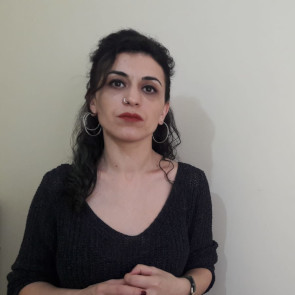
Umida Niyazova, defensora de los derechos humanos y periodista, fue puesta en libertad el 8 de mayo del 2007 luego de otorgársele una sentencia en suspenso, dada la apelación presentada ante los siete años de prisión que le dictaran el 1 de mayo del 2007.

La sentencia a Umida Niyazova se redujo a siete años en suspenso, pero las condiciones de su libertad son: que respete un toque de queda a las 22:00, que se presente regularmente en la estación de policía local y que informe a las autoridades de cualquier cambio en su profesión. Asimismo, se informó que permanecerá bajo vigilancia los próximos tres años.

El 1 de mayo del 2007, Umida Niyazova había sido sentenciada a siete años de prisión por la Corte de Distrito de Sergeli, en Tashkent. Fue acusada en virtud del artículo 246, parte 1 del Código Criminal uzbeco, bajo cargo de “contrabando”, dado que no declaró su ordenador portátil al cruzar la frontera. También fue procesada bajo el artículo 223, parte 1, supuestamente por haber cruzado la frontera de modo ilegal y bajo el artículo 244/1 por supuestamente cruzar literatura “extremista” por la frontera.  Read More

Campaign for Umida Niyazova

Umida Niyazova, Uzbek journalist and human rights defender, was arrested on 22 January 2007 and taken to the pre-trial detention unit in the Uzbek city of Andijan. She was detained for four days before being handed over to the Office for Prosecution of Transport Offences in Tashkent on 26 January. On 21 December 2006, Niyazova's computer and passport were confiscated upon her arrival from Kyrgyzstan to the Tashkent airport in Uzbekistan. The customs officials said her computer contained illegal material. She was forced to flee Uzbekistan. Umida Niyazova turned to the UN in Bishkek (Kyrgyzstan) for protection. The Kyrgyz immigration services registered her as a person in need of protection. She was informed that all charges against her would be dropped on her return to Uzbekistan; however, she was arrested upon her arrival. The Office for Prosecution of Transport Offences in Uzbekistan initiated a criminal case against Niyazova for violation of articles 233 ("illegal border-crossing") and 246 ("illegal transportation of information material") of the criminal code. Umida Niyazova has worked for CJES since 2000 and with the Central Asian Internet magazine "Oasis" since 2005.  Read More

Human Rights Watch Honors Human Rights Defenders

Human Rights Watch Honors Human Rights Defenders Human Rights Watch issued a press release on 31 Ocober to announce the winners of the 2006 Human Rights Defender Awards. Omid Memarian from Iran, Salih Mahmoud Osman from Darfur and Beatrice Were from Uganda will be awarded the prestigious award at a ceremony on 7 November. Read the Human Rights Watch Press Release here

Acusado del asesinato del defensor de los derechos humanos absuelto

La Corte Suprema de Indonesia ha absuelto a la única persona acusada del asesinato del destacado defensor de los derechos humanos Munir Said Halib, según un comunicado emitido por el grupo Human Rights Watch el 6 de octubre.

Munir era el director del grupo de derechos humanos Imparsial y murió envenenado en un vuelo desde Yakarta a los Países Bajos en septiembre de 2004.

Para leer el comunicado completo de Human Rights Watch haga clic aquí:

http://hrw.org/english/docs/2006/10/06/indone14349.htm

Guide to the International Criminal Court for Human Rights Defenders, September 2004

Human Rights Watch has published an excellent guide to how human rights defenders can work with the International Criminal Court (ICC)entitled How Nongovernmental Organizations Can Contribute To the Prosecution of War Criminals. The guide answers some of the frequently asked questions about the Court. In particular it explains how NGOs can contribute to the Court’s work of prosecuting war crimes, crimes against humanity, and genocide at the international level. It does so by answering frequently asked questions about the International Criminal Court and the way NGOs can contribute to its efforts. Further information on the ICC can also be found on this website at Tools & Manuals/The International Criminal Court - Information for Human Rights Defenders.

Distribuir contenido